The Story Unfolds
In the sixth month of Elizabeth's pregnancy, God sent the angel Gabriel to Nazareth, a town in Galilee, to a virgin named Mary who was pledged to be married to Joseph. The angel went to her and said, "Greetings, you who are highly favored! The Lord is with you." Mary was greatly troubled at his words and wondered what kind of greeting this might be. But the angel said to her, "Do not be afraid, Mary; you have found favor with God. You will conceive and give birth to a son, and you are to call him Jesus. He will be great and will be called the Son of the Most High." Mary asked, "How will this be, since I am a virgin?" The angel answered, "The Holy Spirit will come on you, and the power of the Most High will overshadow you. So the holy one to be born will be called the Son of God."
Story Summary
The angel Gabriel announces to Mary that she will bear the Son of God.
Masterpiece Showcase
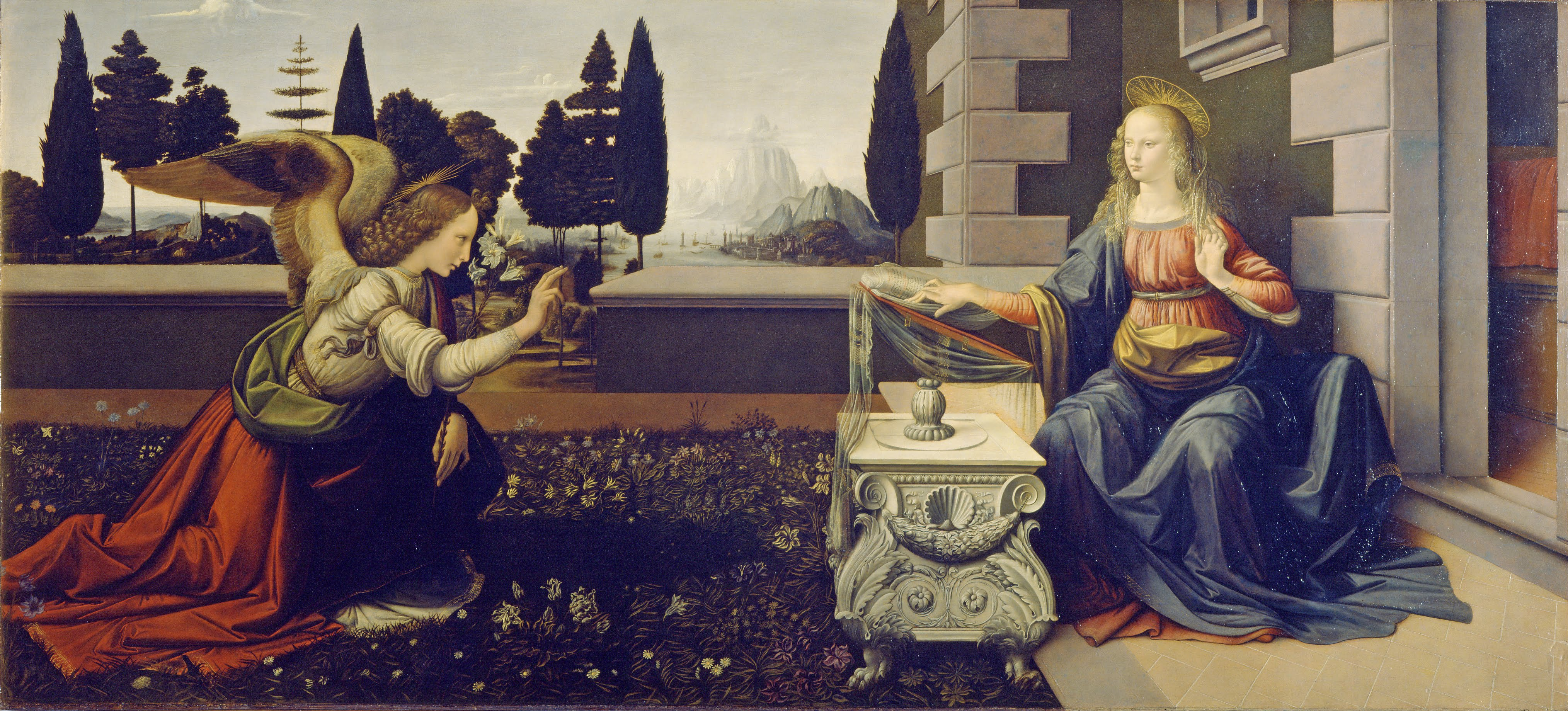
Artwork Details
"The Annunciation"
Leonardo da Vinci
c. 1472–1476
Oil and tempera on wood
Uffizi Gallery, Florence
Curator's Insights
About the Art
This is thought to be Leonardo's earliest complete major work, showing his mastery of perspective, botanical accuracy, and atmospheric effects.
About the Artist
Leonardo da Vinci was the quintessential Renaissance genius, combining artistic brilliance with scientific observation and innovation.
Historical Context
Painted during the Early Renaissance, this work demonstrates the period's focus on naturalism, classical architecture, and biblical humanism.
Techniques Used:
Symbolism:
- Lily represents Mary's purity
- Garden setting suggests new Eden
- Angel's gesture shows divine message
Interactive Art Adventure
Look Closer
- Notice how Leonardo painted every detail of the flowers and trees
- Look at the angel's beautiful wings and flowing robes
- See how the background landscape fades into the distance
Creative Spark
Leonardo studied nature carefully. Go outside and draw a flower or leaf, paying attention to every detail like he did.